Teeth Whitening Device Market 2026–2035: Growth, Trends & Winning Strategies
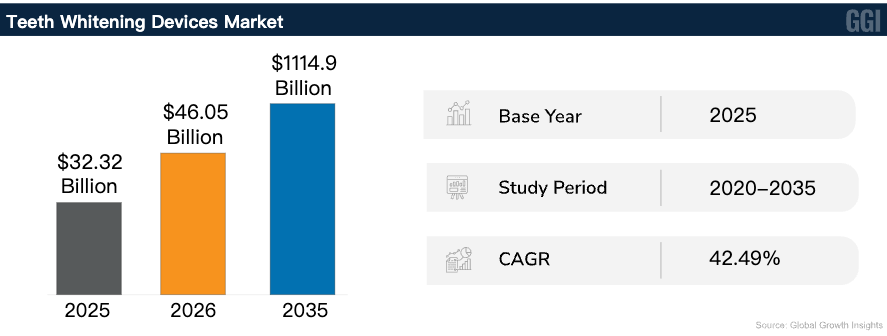
The global teeth whitening device market is poised for explosive growth from 323.2 billion in 2025 to over 1 trillion by 2035, with a CAGR of 42.49%. This article dives deep into market segmentation, regional insights, key players, driving forces, challenges, and actionable investment strategies to help you stay ahead in this booming industry.
If you’ve ever scrolled through social media or browsed online stores, you’ve likely noticed the buzz around teeth whitening devices. Whether it’s a sleek portable LED kit or a clinically-proven tray system, more people than ever are choosing to brighten their smiles from the comfort of home. In fact, recent data reveals that the global teeth whitening device market is set to skyrocket from $323.2 billion in 2025 to over $1 trillion by 2035, expanding at a staggering 42.49% CAGR. So, what’s driving this explosive growth? And how can consumers and investors navigate this ever-evolving landscape? Let’s break it all down.
Market Overview: The Shift to Home Whitening
The teeth whitening device market is undergoing a dramatic transformation. As aesthetic awareness rises, about 69% of consumers now actively seek device-based whitening solutions, with 58% of demand coming from home-use products. Convenience, privacy, and cost-effectiveness are the main drivers behind this shift. Moreover, 67% of users now consider device-based whitening a regular part of their daily grooming routine—a clear sign that the market is moving from professional clinics to personal care cabinets.
Market Size & Growth: A Billion-Dollar Opportunity
| Year | Market Size (USD) | Remarks |
|---|---|---|
| 2025 | 323.2 billion | Base year |
| 2026 | 460.5 billion | Forecast start |
| 2027 | 656.2 billion | Continuing growth |
| 2035 | 11,149 billion | Forecast end |
The compound annual growth rate (CAGR) of 42.49% over the 2026–2035 period is nothing short of phenomenal. This surge is fueled by consumer desire for fast, safe, and convenient whitening, coupled with innovations like LED technology and ergonomic designs.
Key Market Segments: What Consumers Prefer
Understanding the breakdown by product type and sales channel helps identify where the real opportunities lie.
| Segments | Market Size (2026) | Share | CAGR (2026-2035) |
|---|---|---|---|
| Portable devices | 278 billion | 61% | ~46% |
| Desktop devices | 178 billion | 39% | ~41% |
| DTC sales | 305 billion | 68% | ~48% |
| Non-DTC sales | 145 billion | 32% | ~39% |
Portable devices dominate with 61% market share, driven by millennial and Gen Z users who value portability and lifestyle compatibility. Meanwhile, DTC sales capture 68% of the market, reflecting the power of online platforms and social media influence in purchase decisions.
Regional Insights: Where the Growth Is
| Region | Market Size (2026) | Share | Key Features |
|---|---|---|---|
| North America | 156 billion | 34% | High awareness, 63% home use, 58% LED preference |
| Europe | 124 billion | 27% | Safety-first, 52% pharmacy/clinic channel |
| Asia-Pacific | 119 billion | 26% | Fastest growth, 66% portable, 59% online |
| Middle East & Africa | 57 billion | 13% | Steady growth, 57% home devices |
North America remains the largest market, but Asia-Pacific is the fastest-growing region, fueled by rising disposable incomes, increasing aesthetic awareness, and social media influence. For investors looking to expand, the Asia-Pacific region offers the highest growth potential.
Drivers & Challenges: The Push and Pull Factors
What’s propelling this market forward? First, 68% of adults consider tooth color a vital part of their appearance. Second, 61% prefer home-use devices for convenience and privacy. Third, LED technology is now favored by 58% of users for its fast and safe results. Finally, social media influences 48% of first-time buyers. On the flip side, challenges remain: 36% worry about tooth sensitivity, 33% lack professional guidance, and 42% struggle to differentiate between brands. Addressing these pain points is key to capturing market share.
Latest Trends: Innovation at the Forefront
Product innovation is accelerating. Low-heat LED technology is now a focus for 47% of manufacturers to reduce sensitivity, while smart app integration appears in 33% of new devices for guided treatments. Custom-fit trays are in 41% of demand, and sustainable packaging is adopted by 29% of brands. Additionally, 62% of devices are now purchased online, and 48% of users upgrade their devices for better comfort and efficacy. These trends point toward a future that is smarter, greener, and more user-centric.
Frequently Asked Questions
Q: Are home teeth whitening devices safe? A: Yes, when used as directed. Look for devices with low-heat LED technology and consult your dentist if you have sensitive teeth.
Q: Which type is better, portable or desktop? A: Portable devices are best for on-the-go use, while desktop models offer more uniform results for home use.
Q: How fast will I see results? A: Most users see noticeable whitening within 1–2 weeks of regular use, depending on the device and starting shade.
Q: Can I use a whitening device if I have crowns or veneers? A: Whitening agents typically don’t affect dental restorations, so they may not match your natural teeth. Consult your dentist first.
Conclusion & Actionable Advice
The teeth whitening device market is not just growing—it’s exploding. For consumers, this means more choices than ever and devices that are safer, smarter, and more effective. For businesses and investors, the opportunities lie in targeting home-use, DTC channels, and the Asia-Pacific region, while solving the key pain points of sensitivity and product differentiation.
Ready to brighten your smile or capitalize on the market? Here are three quick wins: 1) If you’re a consumer, look for LED devices with customizable settings and low-heat technology. 2) If you’re an entrepreneur, focus on direct-to-consumer online sales with strong social media campaigns. 3) For investors, consider funding startups that combine medical credibility with lifestyle branding and sustainable practices.